Your Carrier Knows More Than You Think: The Telecom Vulnerabilities Quietly Exposing American Mobile Users
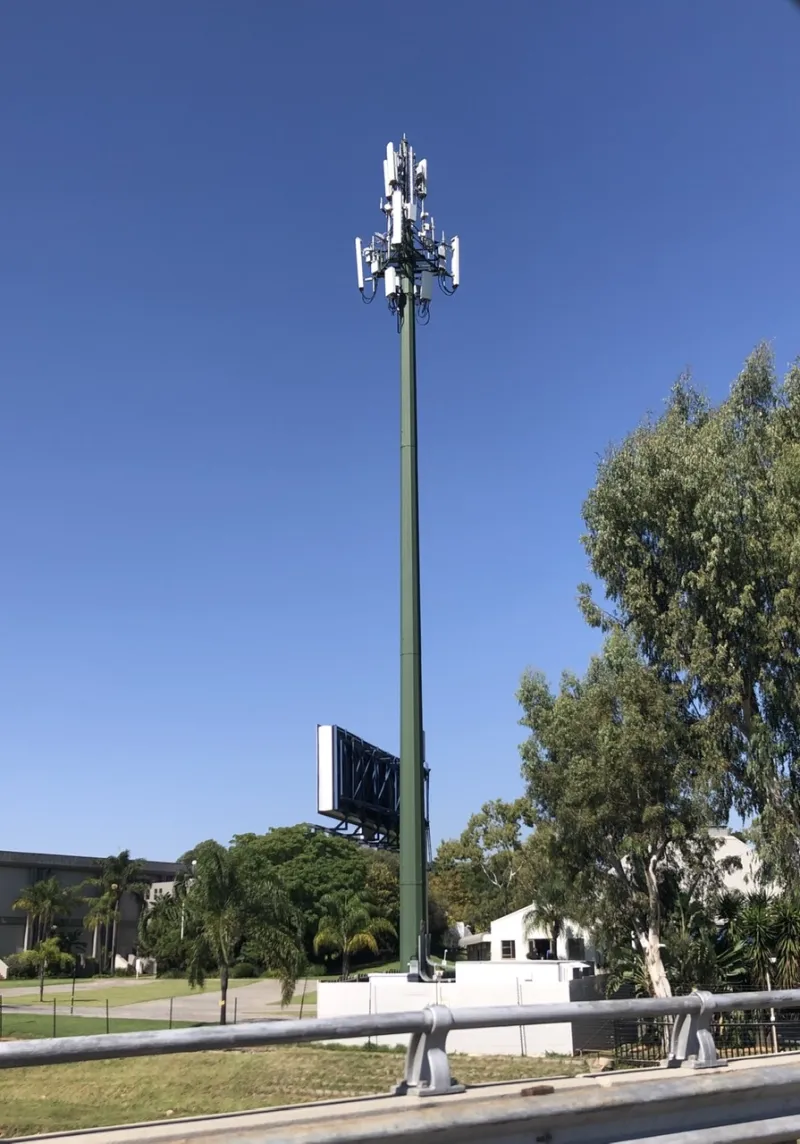
Photo: TapticInfo, CC BY-SA 4.0, via Wikimedia Commons
The Foundation Beneath Your Encrypted Messages Has Cracks
When most people think about mobile security, they picture a hacker attempting to break through the encryption of a messaging app or brute-forcing a password. That mental model, while not wrong, is dangerously incomplete. The cellular networks operated by major US carriers — the very pipes through which every call, text, and data packet flows — contain structural vulnerabilities that have persisted for decades. These weaknesses exist not because carriers are negligent, but because the protocols underpinning global telecommunications were designed in an era when the concept of a malicious state-level actor exploiting them was largely theoretical.
That era is long over.
SS7: A Protocol Designed for a More Trusting World
Signaling System No. 7, commonly referred to as SS7, is the set of protocols that telephone networks use to exchange information necessary for routing calls and text messages. Developed in 1975 and widely adopted throughout the 1980s, SS7 was built on an implicit assumption: that only authorized telecommunications companies would ever have access to it. That assumption has proven catastrophically false.
Today, access to SS7 infrastructure can be purchased through certain gray-market intermediaries, and nation-state intelligence agencies are widely reported to exploit it routinely. An attacker with SS7 access can intercept SMS messages in real time — including the one-time passcodes your bank just sent you. They can track the approximate geographic location of a target device without the user's knowledge. They can even redirect calls, effectively listening in on conversations that the participants believe are private.
The critical detail that most security guides fail to emphasize is this: SS7 attacks happen at the network level, entirely outside the reach of anything installed on your phone. Your device can be fully patched, your apps meticulously updated, and your passwords impeccably strong — and an SS7 attack will still succeed if someone with the requisite access decides to target you.
For ordinary Americans, the most immediate consequence of SS7 vulnerability is the fragility of SMS-based two-factor authentication. Any account that relies on a text message code as its second factor is, in a meaningful sense, only as secure as the telecommunications infrastructure itself.
SIM Swapping: The Social Engineering Attack Carriers Struggle to Stop
While SS7 exploitation generally requires technical sophistication and infrastructure access, SIM swapping is a far more accessible attack that has victimized thousands of Americans in recent years. The Federal Trade Commission has documented a steady rise in SIM swap complaints, and high-profile cases — including the theft of millions of dollars in cryptocurrency from victims whose phone numbers were hijacked — have brought the tactic into mainstream awareness.
The mechanics are straightforward. An attacker contacts a carrier's customer service department, impersonates the account holder using personally identifiable information gathered from data breaches or social media, and convinces a representative to transfer the victim's phone number to a SIM card the attacker controls. From that moment forward, every call and text intended for the victim — including every authentication code — is routed to the attacker's device.
Carriers have implemented verification procedures to combat this, but the effectiveness of those measures varies significantly across providers and even across individual customer service representatives. The human element remains the persistent weak point. Attackers have demonstrated a willingness to attempt multiple calls until they reach a representative more susceptible to their social engineering, or to exploit specific account configurations that make verification easier to circumvent.
What Carriers Are — and Are Not — Doing About It
The major US carriers are not unaware of these problems. The GSMA, the international organization representing mobile operators, has published security guidelines intended to mitigate SS7 abuse, and some carriers have implemented filtering mechanisms designed to block the most obviously malicious SS7 messages. The FCC has also taken a renewed interest in the issue, opening proceedings in recent years to examine what obligations carriers should bear for protecting customers from SIM swap fraud.
However, progress has been uneven. SS7 is a global protocol, and its security is only as strong as the least rigorous network connected to it. A carrier that has hardened its own SS7 implementation can still be circumvented if an attacker routes their queries through a less scrupulous foreign network. This is not a problem any single American carrier can solve unilaterally.
For SIM swapping, carriers have introduced measures such as number lock features and additional account PINs, but these tools are frequently opt-in and poorly publicized. Many customers remain unaware they exist.
Practical Steps to Harden Your Account Against Carrier-Level Threats
Acknowledging that certain vulnerabilities exist at a systemic level is not a reason for fatalism. There are concrete actions that US mobile users can take today to substantially reduce their exposure.
Eliminate SMS as a second factor wherever possible. Any account that allows you to switch from SMS-based two-factor authentication to an authenticator app — such as Google Authenticator, Authy, or a hardware security key — represents a meaningful security upgrade. Authenticator apps generate codes locally on your device and are entirely immune to SS7 interception and SIM swap attacks. For your most sensitive accounts, particularly financial accounts and email, this transition should be treated as urgent.
Activate your carrier's SIM lock or port freeze feature. All four major US carriers — AT&T, Verizon, T-Mobile, and US Cellular — offer some form of number lock or additional security PIN that makes unauthorized SIM swaps significantly more difficult. Contact your carrier directly or visit their security settings online to enable these protections. Ensure the PIN you set is not derivable from information publicly associated with your identity.
Place a freeze on your account with all three major credit bureaus. SIM swap attackers frequently use personal information sourced from data breaches. A credit freeze limits the exposure of your financial identity and can serve as a broader protective measure against the data harvesting that enables carrier-level social engineering.
Treat your phone number as sensitive information. Your mobile number has become, in practice, a de facto identity credential. Limit the number of services and accounts linked to it. Where a service requires a phone number but does not genuinely need one, consider using a secondary number through a service such as Google Voice — keeping your primary carrier number reserved for your most critical accounts.
Use end-to-end encrypted voice and messaging apps for sensitive communications. While SS7 can intercept traditional calls and SMS messages, applications such as Signal that establish encrypted connections directly between devices are not susceptible to SS7 interception in the same way. The encryption occurs above the layer that SS7 operates at.
The Broader Principle: Defense Requires Understanding the Whole Stack
The security of your mobile device is not simply a function of the software running on it. It extends downward through the operating system, through the hardware, and ultimately into the telecommunications infrastructure that connects your device to the broader world. Each layer carries its own risks, and a coherent approach to mobile security requires at least a working awareness of all of them.
Carrier-level vulnerabilities represent a category of threat that most consumer security guidance glosses over, in part because users have limited ability to fix the underlying problems and in part because the technical concepts involved feel remote from everyday experience. But the consequences — intercepted authentication codes, hijacked phone numbers, compromised financial accounts — are anything but abstract for the Americans who have experienced them.
Understanding where your carrier's responsibility ends is the first step toward taking meaningful ownership of the risks that remain yours to manage.